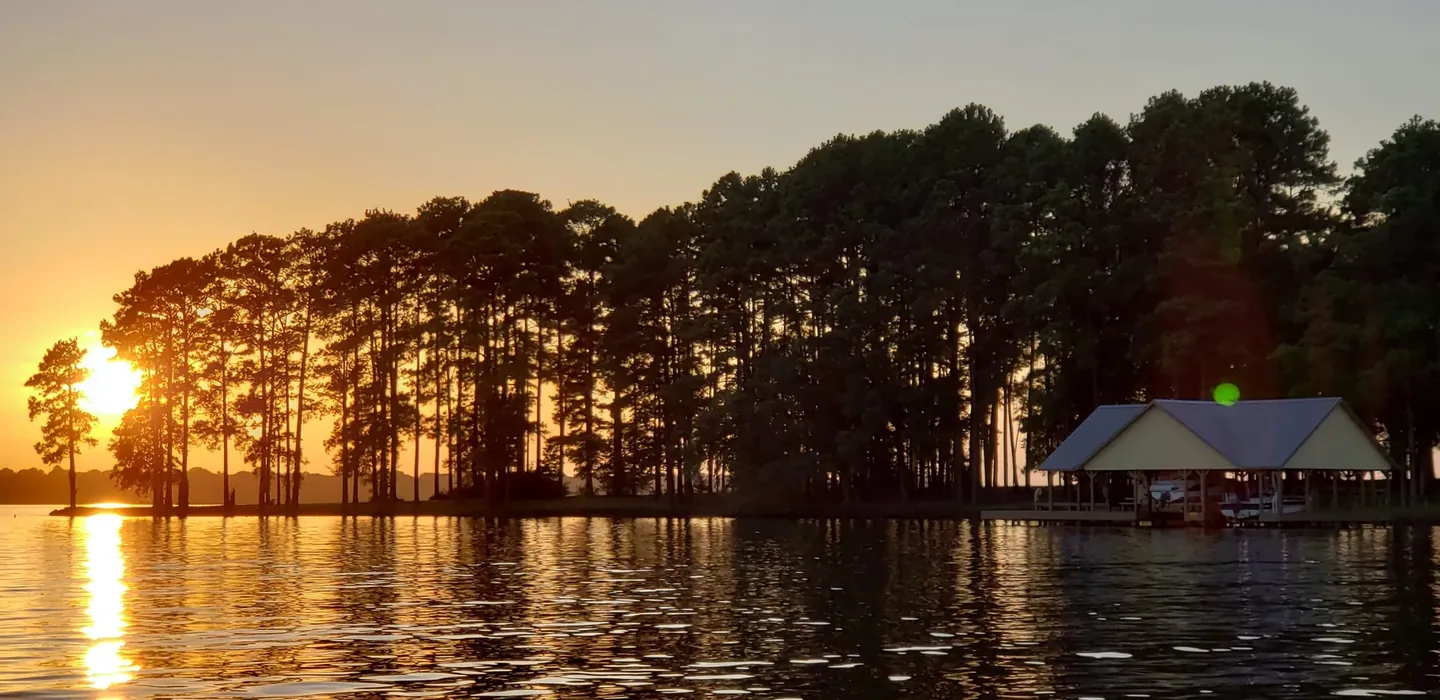
Lake Palestine home values do not follow the rules people bring with them from town. Let me tell you why. Two homes on Lake Palestine can have the same square footage, the same bedroom count, and sit three miles apart, and still be worth strikingly different amounts. I see it every year. One sells quickly at a number that surprises the neighbors, and the other sits while the owner wonders what went wrong.
Here's the part that catches people off guard. On this lake, a lot of the value is decided outside the house.
The water off your dock, the direction your shoreline faces, the shape your bulkhead is in, how far you are from Tyler, and what's selling around you can matter as much as the kitchen. A buyer walking your property is reading all of that in the first few minutes, usually before they ever step inside. My husband and I have lived on Lake Palestine for almost 20 years, and I've spent more than 12 years selling real estate in East Texas. The homes that beat their neighbors on price are almost never the ones with the prettiest countertops. They're the ones where the water works.
Curious what your Lake Palestine property is worth right now?
I don't run your address through a national estimator and call it a day. I look at your water, your dock, your shoreline, and the sales that actually compare to yours.
Request a Lake Palestine Home Value ReviewOr text me at 903-724-2338.
Below is how I actually think through a Lake Palestine property, factor by factor. If you're a homeowner thinking about selling in the next couple of years, this is the list I'd walk your property with.
Why Lake Palestine Homes Can't Be Valued by Square Footage Alone
What determines the value of a Lake Palestine home? Price per square foot is one of the weakest tools you can use on this lake. Value here comes from the water and the land as much as the structure: the type of frontage, the depth at your dock, the condition of the shoreline and dock, the view, the lot, the location around the lake, and the specific set of buyers competing for that combination.
In town, square footage does a lot of the heavy lifting. Similar houses on similar lots in the same subdivision land in a tight range, and a price per foot gets you close.
Lake Palestine doesn't work that way. This is a 25,560 acre reservoir with roughly 135 miles of shoreline, impounded on the Neches River in 1962, and it stretches across four counties. Anderson, Cherokee, Henderson, and Smith. (Texas Parks and Wildlife; Handbook of Texas) It is not one market. It's a couple dozen small markets that happen to share a body of water.
Which means the 2,400 square foot house on deep, protected water with a solid boathouse and the 2,400 square foot house upstream in a shallow, timbered arm are not comparable properties. They're two different products. Running them through the same price per foot is how a good property gets underpriced and a tough one gets overpriced and then sits.
Open Water or Cove: How Frontage Type Moves Value
Is open-water frontage worth more than a cove on Lake Palestine? Not automatically. Open water and protected cove frontage appeal to different buyers, and on this lake a cove home over deep, usable water can absolutely outsell an open-water home in a weaker location. Frontage type changes who your buyer is more than it changes your price.
Open water gives you the long view and, usually, more depth off the dock. It also gives you wind and weekend wake. Some buyers want exactly that, because they're running a bigger boat and they want the horizon.
Cove frontage gives calm water, shade, and privacy. If a family has kids swimming off the dock or a couple paddles at sunrise, the calm is worth real money to them. What a cove costs you is sightline, and back in the creek arms it can cost you depth.
The mistake I see in pricing is treating "open water" as a premium tier and "cove" as a discount tier. It isn't that clean. A deep cove with a good dock and an easy walk to the water can bring more than an open-water lot with a steep bank and shallow frontage. What matters is the whole package, and how many buyers are chasing it.
If you want the buyer's side of that comparison in detail, I wrote a full breakdown here: Cove vs Open Water on Lake Palestine.
I had a couple who came in set on open water. They wanted the widest view they could get and that feeling of being right on the main lake, so those are the properties we looked at first.
What changed their mind was spending a Saturday on the water. On the open-water lots the boat traffic was constant and the wakes never really stopped. In the cove it was quieter and the water stayed calmer, and they could actually picture using the dock with their kids instead of just looking at the lake from the house.
They still wanted deep water and a real boat slip, and they got both. They just realized they were going to spend more time swimming, fishing, and sitting on the dock than running the main lake. The cove gave them that without giving up the lake.
That's usually the turning point. It isn't about which property has the biggest view. It's about how you're actually going to use the water once you live there. It's also why I won't price frontage type on a sliding scale. To that couple, the cove home was worth more than the open-water home they walked away from.
Why Water Depth at Your Dock Matters More Than the Lake's Average Depth
How much does water depth affect a lake home's value? Depth at your own dock is one of the biggest single factors, because it decides whether the property is usable in a dry summer. Lake-wide averages tell a buyer almost nothing about your specific spot.
Texas Parks and Wildlife lists Lake Palestine's maximum depth at about 58 feet, down toward Blackburn Crossing Dam, with a conservation pool elevation of 345 feet above sea level. The average across the whole lake is far shallower. That average is useless to you as a homeowner. What matters is the number under your boat lift in late August.
Lake Palestine moves. It comes up hard after a wet spring and drops in a dry stretch, and the Upper Neches River Municipal Water Authority posts the current level daily. A property that holds good water at the dock through a dry year is a materially different property from one where the boat has to be walked out to deeper water in September. Buyers who have owned on a lake before ask about this in the first ten minutes. Buyers who haven't owned on a lake before find out from their inspector, their surveyor, or their neighbor, and then they renegotiate.
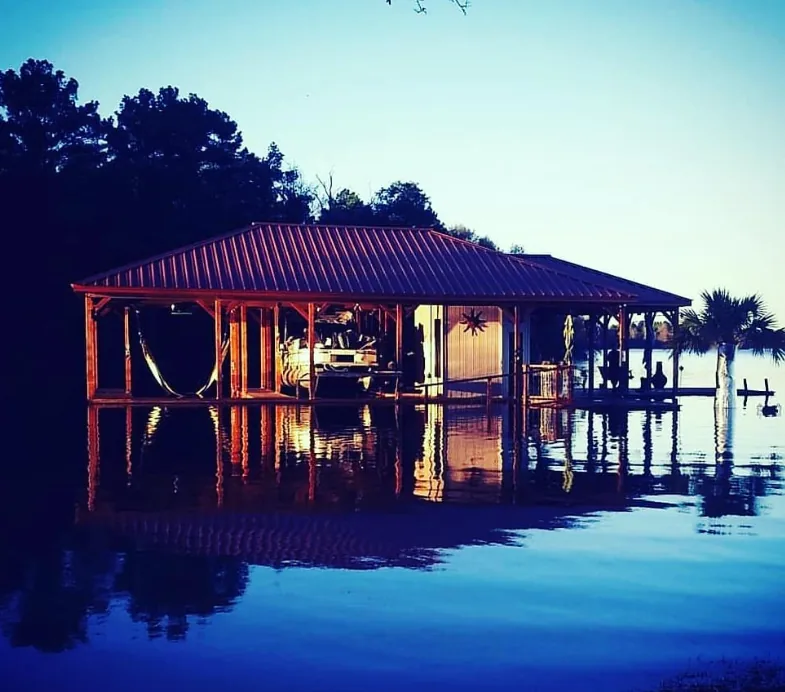
Depth runs with geography here. Texas Parks and Wildlife puts the inundated timber above the Highway 155 bridge, through the Kickapoo and Neches River arms, Highsaw, Ledbetter, and Flat Creek. That's excellent fish habitat. It's also the part of the lake where a buyer with a 25 foot boat starts asking careful questions.
None of that makes an upper-lake property a bad property. It makes it a different property with a different buyer, and it needs to be priced against homes in the same situation.
How Your Dock and Boathouse Affect Value
Does a boat dock increase a Lake Palestine home's value? Yes, and a good one does more than add value. It removes an objection. A sound, usable dock with working power and a lift that operates is often the difference between a clean offer and a buyer asking for money back at inspection.
Here's what buyers are actually looking at when they walk out on your dock.
Condition of the structure. Decking, pilings, roof, and whether the whole thing sits level. Rot and sagging read as expense, and buyers overestimate that expense almost every time.
Electrical. Dock power is the one I care most about. Old wiring, corroded boxes, no GFCI protection, or a panel that's been added onto over the years is a safety issue first and a value issue second. Get it looked at by an electrician who works on docks, not just any electrician.
The lift. A boat lift that runs, with cables and a motor that aren't shot, is a real asset. One that hasn't been operated in three years is a question mark, and buyers price question marks harshly.
Size and function. One slip or two, room for a jet ski, whether there's a deck to sit on, whether it works when the lake is high and when it's low.
Replacing a dock and boathouse is not a small line item, and buyers know it. A tired dock rarely costs a seller a little. It costs a lot, because the buyer prices the unknown and builds in a cushion.
Do Dock Permits Matter When You Sell?
Can an unpermitted dock cause problems when selling a Lake Palestine home? It can, and this is the item most owners have never thought about. Lake Palestine is owned and operated by the Upper Neches River Municipal Water Authority, and the land around the water up to the takeline is Authority land. Structures on it are permitted, not simply owned.
Here's what the Authority's published rules say. A Limited Use Permit has to be obtained before constructing or placing improvements on Authority land. The permit application asks for a recorded plat showing lakefront dimensions and the location of improvements, proof of ownership, plans and specifications, and construction details. Property corners are marked at the takeline elevation of 355.0 feet above sea level. No sewage facilities are allowed below that takeline. An on-site inspection happens before a permit is issued, and a construction permit is good for 180 days. The Limited Use Permit itself carries an annual fee based on the lot and the frontage along the 355.0 line.
What that means in practice is simple. Your dock, boathouse, bulkhead, and anything else out there has a paper trail, or it doesn't. If a previous owner built or extended something without going through the process, that shows up at the worst possible time, which is usually while a buyer's lender and title company are asking questions.
I'm a REALTOR® and not a lawyer, so I'm not going to tell you what your permit situation means legally. What I will tell you is that finding out early is free and finding out late is expensive. Call the Authority at 903-876-2237, ask what's on file for your address, and know the answer before a buyer's agent does. If you want the details, I wrote up how Lake Palestine dock permits work, including the current fees and the survey that has to happen before the inspection.
Here's what that looks like in practice. I had a listing where the house showed well and the covered slip looked perfectly usable from the water. During the option period we pulled the UNRMWA file. There was no current permit matching what had actually been built out there. The structure had been added onto over the years, and some of the pilings were failing.
That was not a weekend repair.
The buyers stayed in the deal. They also came back asking for a substantial credit, and they wanted the seller working with the Authority before closing. That seller had priced the home as though the boathouse was an asset. Once it turned into a permitting and replacement question, the number changed.
I've seen it protect a seller too, and that's the version I want for you. One seller had already rebuilt the boathouse, and had the current Limited Use Permit, the photos, the plans, and the receipts together before we ever went on the market. The buyers could see exactly what had been done and verify the paperwork themselves instead of wondering what might surface later. That file is the reason the negotiation never turned into a dock discount.
The house is what gets a buyer interested. The condition of the dock and what's in the permit file often decide whether that dock adds to your price or comes out of it.
Views, Orientation, and the Direction Your Water Faces
Two waterfront homes can both have "a great view" and be worth different money, because view is not one thing.
What buyers respond to is the length of the sightline and what's in it. A long look down open water reads differently than a short one across at a neighbor's boathouse. A point lot with water on two sides is its own category.
Orientation does more work than people expect, and it's the part an out-of-town buyer has no way to read from a listing photo. A buyer coming down from Dallas is looking at a picture taken on a still morning. That is not how most people actually live on this lake.
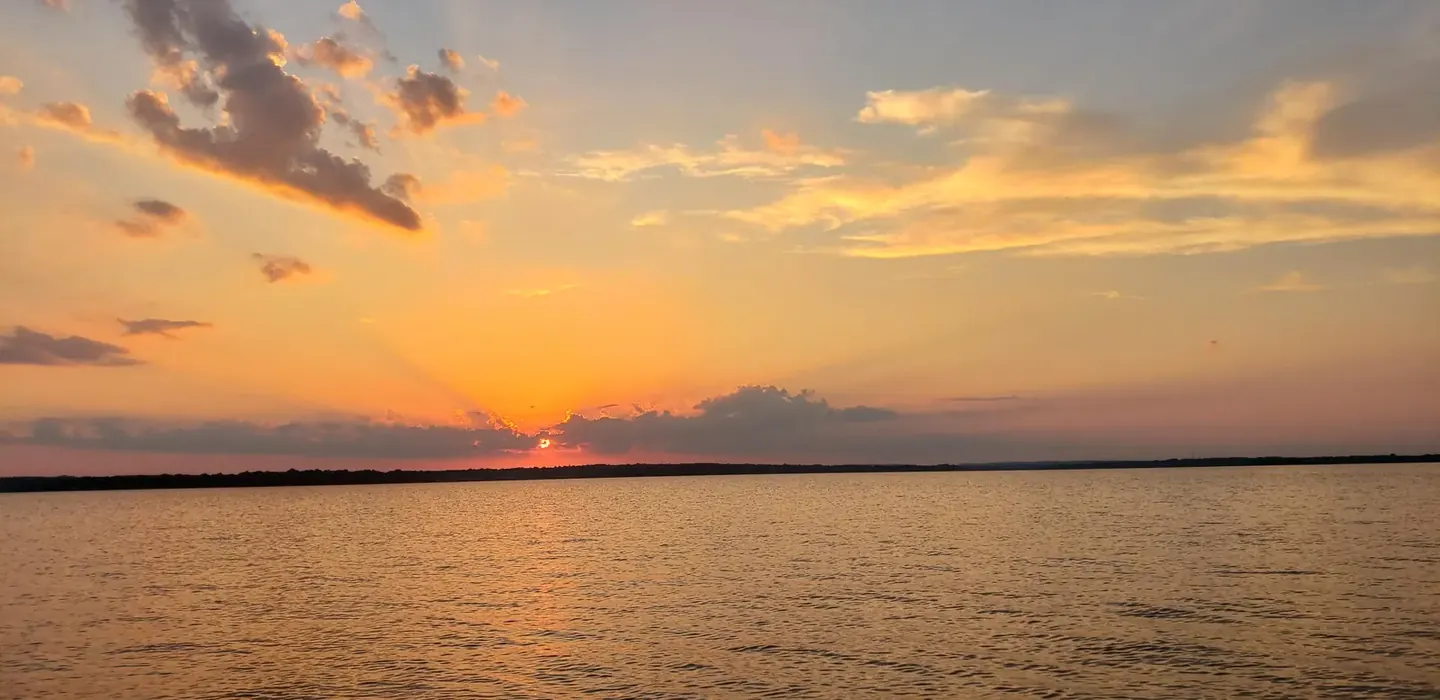
Afternoon sun is the first surprise. A house facing west across open water gets the sunset, and it also takes the heat on the porch and the dock from about two o'clock on. The glare off the water is real, and in July you feel it. East-facing lots get the sunrise and usually hold more usable shade on the water side later in the day.
Same lake. Completely different afternoon.
Wind is the second thing buyers notice. Summer wind here is often out of the south or southwest, and on the longer open stretches it builds chop. Boat wakes hang around longer on open water too. Move into a protected cove or one of the timbered arms and the water settles down considerably. Families usually notice that the first Saturday they try to swim off the dock.
Weekend traffic follows the same pattern. Tournament mornings and Saturday afternoons put more boats on the main channels, around the bridges, and near the easier public ramps. The farther back you get into a protected arm, the more it feels like a different lake.
Buyers from out of town usually start out wanting the biggest view they can find. What they haven't thought about is how that view behaves from Friday evening through Sunday. That's why I like to show a Lake Palestine property at the time of day a buyer will actually use it, not the time the listing photos were taken.
For a seller, this cuts both ways. Your orientation and your exposure decide which buyers your home genuinely fits, and they decide when it shows best. Both belong in how the property gets priced and marketed.
Shoreline Condition Is a Value Factor, Not a Maintenance Item
Most sellers think of the shoreline as upkeep. Buyers read it as risk.
Erosion at the water's edge, a leaning retaining wall, a bulkhead that's separating, riprap that has washed out, a bank cutting back toward the yard. Every one of those makes a buyer wonder what it costs to fix and whether the problem is still moving. Because they don't know, they assume the high number.
The reverse is also true, and this is the part I wish more sellers heard before they list. A stabilized shoreline in good repair is one of the strongest quiet signals on a lake property. It tells a buyer the place has been taken care of at the point where neglect is most expensive.
If you're a year or two out from selling, shoreline work is one of the few improvements on a lake home I'd argue for ahead of anything cosmetic. Just remember that shoreline structures are Authority-permitted work, so start with the permit question, not the contractor.
The Lot Matters More Than Many Sellers Realize
The house sits on the lot for its whole life, and buyers feel the lot before they feel the floor plan.
Waterfront footage. How much shoreline you actually own is a real driver. More frontage generally means more privacy, more flexibility for a dock, and a stronger comp position.
Slope and access to the water. This is the underrated one. A gentle walk from the back door to the dock is worth a great deal to a buyer in their sixties, and to a family carrying coolers and kids down to the boat. Sixty steps down a steep bank narrows your buyer pool considerably, no matter how good the view is at the top.
But a slope isn't always a strike against a place. Take Eagles Bluff, one of the most beautiful neighborhoods on the lake. Some of those homes sit right out on the bluff, and getting down to the water can take some work because of the incline. An ATV or a golf cart handles it just fine. And those same homes have some of the best sunset views on Lake Palestine. For the right buyer, that view is worth the ride down to the dock.
Usable yard. This is where a lot of lake life actually happens. A flat, open stretch of grass near the water is where the fire pit goes, where the kids throw a football while the grill heats up, and where friends pull up chairs to watch the sun go down. It's also room to grow. If a pool is on your wish list, having level ground ready for it is a real plus, and it has to sit above the 355-foot line, per UNRMWA's building guidelines. When I walk a lot with a buyer, I'm not just looking at the acreage. I'm looking at how much of it you can really enjoy.
Trees and privacy. Mature East Texas timber is one of the best things a lake lot can have. Big oaks and tall pines keep the yard and the house cooler through a Texas summer, and they give you a screen from the neighbors that no fence can match. Sitting on the porch with your coffee and feeling like you have the place to yourself is something buyers fall in love with, and they'll pay for it.
If you're thinking about opening up the view, know the rules before you pick up a chainsaw. Much of the ground near the water belongs to the Authority. Its building guidelines (page 4) let you clear trees and brush under 3 inches in diameter by hand for a view without a permit. Clearing with equipment that tears up the topsoil needs a permit and erosion control, and anything outside that hand-clearing exception is worth asking the Authority about first. And timber on Authority land belongs to the Authority, so any money from selling it goes to them. A quick call to UNRMWA can save you a real headache.
Road access. Paved or gravel, how the last half mile drives, and whether a boat trailer can get in and turn around. County road frontage and a long private drive are two very different experiences.
Roads vary a lot from one neighborhood to the next around this lake, and it's worth paying attention on the drive in. Communities like Eagles Bluff, Emerald Bay, and Browns Landing tend to have higher homeowner's association fees, and it shows in how well their roads are kept up.
Some of the older gated neighborhoods are a different story. The county used to maintain a lot of those roads, but once a community is behind a gate, the upkeep becomes the community's responsibility. When enough owners fall behind on their association dues, the roads are usually the first thing to suffer. If you're looking behind a gate, ask who maintains the roads and how the association's budget is holding up. It tells you a lot about what you'll be driving on five years from now.
Location Around Lake Palestine: Same Lake, Very Different Markets
Why can two similar homes on Lake Palestine sell for different prices? Because the lake is roughly 18 miles long and each end of it serves a different buyer. Proximity to Tyler, the school district, and how long it takes to reach a grocery store or a hospital can move value as much as the water does.
The Bullard and Flint end sits closest to Tyler, which puts you near medical, shopping, restaurants, and the airport. That end pulls commuters and buyers who want lake life without giving up a short drive to town. Chandler sits on the north side with its own community feel and quick access to Highway 31. Frankston is on the south end and trades some convenience for quiet, space, and a slower pace, and buyers who choose it are choosing it on purpose.
None of these is the "good" end of the lake. They're different products for different lives. A retired couple from Dallas looking for quiet water and a workshop and a family from Tyler that needs a short school run are not bidding on the same house, even when both houses are on Lake Palestine with three bedrooms and a dock.
Where a property sits on the lake tells me which buyers I'm competing for and which sales are legitimate comparables.
How School Districts Affect Buyer Demand
School district influences demand, and demand influences price. That's the honest version. Anybody who tells you a specific district adds a specific percentage to your value is making it up.
The lake is served by more than one district, including Bullard ISD, Frankston ISD, and Brownsboro ISD, which is the district for Chandler. District boundaries do not follow the shoreline or the county lines. Two homes a few hundred yards apart can be zoned differently. I've had buyers narrow their entire search to one district before they'd look at a single house, and I've had plenty of retired buyers who never asked about schools at all.
What that means for you as an owner is that your district shapes your buyer pool. If you're in a district families actively search for, that's a marketing asset and it belongs in the listing. If your buyers are mostly second-home and retirement buyers, schools barely register and the water does all the work.
Always confirm the district and campus for a specific address with the district itself. Boundaries change, and an old listing is not a source.
Which Home Improvements Matter Most Before Selling a Lake House?
What should I fix before listing my Lake Palestine home? Start with water, structure, and systems. Cosmetics come last on a lake property, which is the opposite of the advice most sellers get.
In rough order of what moves a lake buyer:
- Dock, boathouse, and lift. Safe electrical, a lift that runs, and decking that isn't rotten.
- Shoreline stabilization. Anything actively eroding or failing.
- Roof and HVAC. Age and condition. These are the first two questions on an out-of-town buyer's list.
- Septic and well, if you have them. My advice is to get a septic inspection and have the tank pumped before you list. Buyers almost always ask for it during the option period anyway, so doing it up front takes a common sticking point off the table and shows you have nothing to hide. Pull your records together too. Rural systems slow deals down when nobody can find the paperwork. Around this lake, a septic system within 525 feet of the takeline is permitted through the water authority, per UNRMWA's Rules and Regulations, so have that permit handy if yours falls in that zone.
- Foundation, drainage, and grading. Lake lots slope, and water goes somewhere. Buyers want to see that it isn't going toward the house. Walk your property after a good rain and watch where the water runs. Gutters that drain away from the foundation, ground that slopes away from the slab, and no standing water against the house all tell a buyer the place has been looked after. If there's a crack or a sticking door that has a story behind it, have it looked at and keep the paperwork, because an inspector will find it either way.
- Deck, porch, and railings. Outdoor living space gets used hard on a lake home. It's where people drink their coffee, grill out, and watch the sun go down, so buyers spend a lot of time out there during a showing. Soft boards, loose railings, and peeling stain read as neglect, even when the rest of the house is solid. Replacing a few bad boards, tightening the railings, and a fresh coat of stain can make the whole back of the house feel cared for.
- Paint, fixtures, and finishes. Worth doing, and worth doing last. Once the water, the structure, and the systems are in good shape, fresh neutral paint, updated light fixtures, and a few clean finishes help photos pop and make the house feel move-in ready. Keep it simple and light. Buyers want to picture their own life on the lake, and a clean, bright house makes that easy. Just don't let this spending get ahead of the bigger items above.
What do buyers actually walk away from? They walk when the lake part of the property is a question mark.
A pretty house doesn't save a deal if the dock permit situation is unclear, if the structure doesn't match what was approved, or if the pilings and the electrical are headed for a major inspection issue. Septic is another one. An older or poorly documented system makes an out-of-town buyer nervous fast. So does finding out the slip is too shallow for the boat they already own once the lake drops in a dry summer, especially in the shallower coves.
What sellers spend money on that doesn't come back is money on the house instead of the water.
I see new kitchens, new floors, and fresh landscaping while the shoreline is failing or the boathouse paperwork is still a mess. Buyers will accept a dated interior if they know they can put their boat in the water and feel good about the dock, the shoreline, the septic, and the major systems. They won't pay extra for granite while they're trying to work out what the waterfront is going to cost them.
Fix the dock, the shoreline, and the major property issues first, or price the home knowing those items become the buyer's problem. That's the piece that holds your price or costs you the contract.
Want to know where your home stands?
I'll tell you which of these would actually move your number, and which ones you can skip.
Request a Home Value ReviewHow Comparable Lake Palestine Sales Should Be Selected
How do REALTORS® determine the value of a waterfront home? With a comparative market analysis, which means looking at what similar properties actually sold for. On Lake Palestine, the word doing all the work in that sentence is "similar," and that's where automated online estimates tend to fall short, because they can't see the dock, the water depth, or the shoreline.
A defensible Lake Palestine comp set accounts for:
- Waterfront type. Open water, cove, or channel.
- Depth and usability at the dock.
- Dock and boathouse condition, and whether there's a lift.
- Shoreline condition and whether it's stabilized.
- Waterfront footage and lot slope.
- Location on the lake and drive time to Tyler.
- School district.
- Age, condition, and systems of the home.
- What the property competed against at the time it sold.
You'll notice square footage isn't even on that list. It still matters, but on this lake, the water and the dock usually tell me more about what a home is worth than the size of the house does.
If the only thing two homes have in common is 2,600 square feet and a Lake Palestine address, they are not comps. I'd rather use a sale from a different part of the lake with genuinely similar water than a sale two doors down with water that doesn't compare. Sometimes there just aren't many truly similar homes that have sold recently. When that happens, I'll tell you so, and we'll work out a smart price together rather than acting like the numbers are more exact than they really are.
I pull comps from both the Palestine Association of REALTORS® MLS, through Navica, and the Greater Tyler Association of REALTORS® (GTAR). I use both equally. Properties around this lake show up across different market areas, so working from both platforms gives me a bird's-eye view of what buyers are actually paying for similar homes and lots on the water.
What Lake Palestine Buyers Are Really Paying For
Demand on this lake isn't one pool of buyers. It shifts by price range and by what the property offers.
At entry price points, buyers look hard at whether they can actually get on the water, and what it will cost to make the dock right. Move-in condition matters to a lot of these buyers.
Not every buyer, though. Some come in with a renovation budget and plan to redo the house completely. Whether that makes sense usually depends on where the property sits. A waterfront home, or one inside a lake community with the amenities they're after, can be worth buying for the location and making their own, even if the house itself needs a lot of work.
In the middle of the market the questions get specific. Depth at the dock, boathouse condition, how the lot walks down to the water, and school district if there are kids.
Higher up, buyers are paying for a combination that's hard to find. Good water, real privacy, a lot that lives well, and a house they don't have to fix. Acreage and a long stretch of frontage carry weight here, and so does proximity to Tyler for the second-home buyer driving down from the Metroplex.
Across every range the same things drive the strongest offers. Water you can use year round, a dock that works, a shoreline that isn't a project, and a home the buyer can move into. Recreational appeal is the reason people are on this lake at all. If your property makes that easy, it competes.
Why Zillow and Online Home Estimates Can Miss the Mark on Lake Homes
Why is Zillow sometimes wrong about Lake Palestine homes? Automated valuation models are built on public records and comparable sales, and they do a reasonable job where homes are similar to each other. Lakefront property is the hardest case for them, because the factors that drive the most value on Lake Palestine are not in the data they read.
This isn't a knock on Zillow or Realtor.com. Their estimates work well for a subdivision in Tyler where a hundred similar homes have sold in three years. The model has plenty to learn from, and the homes really are alike.
Hand that same model a waterfront property. It can see your square footage, your bed and bath count, your lot size, your tax records, and nearby sales. It cannot see:
- How deep the water is off your dock in August.
- Whether your boathouse is sound or failing.
- Whether your dock has safe, permitted power.
- Whether your bulkhead is holding or separating.
- Whether your view runs a mile down the lake or a hundred yards into a neighbor's cove.
- Whether the walk to your dock is a stroll or a climb.
- Whether the comparable sale it just used is on water anything like yours.
That last one is the real problem. The model has to pick comps, and it picks them mostly on size, age, and distance. On a 135 mile shoreline with a dozen kinds of water, distance is a poor proxy for similarity.
So an online estimate on a lake home can miss in either direction. I've seen well kept waterfront homes with strong water badly undervalued, and I've seen properties estimated high because the model borrowed a comp from a better stretch of the lake. Use the estimate as a starting point. Don't price your home from it, and don't let it talk you out of selling.
How to Find Out What Your Lake Palestine Home Is Worth
There's no shortcut that beats someone standing on your dock.
When I put a value on a Lake Palestine property, I look at the home, the lot, the water and its depth, the dock and boathouse, the shoreline, where you sit on the lake, the sales that genuinely compare, what's on the market competing with you right now, and which buyers are active in your range. Then I tell you what I think it will bring, and why, including the parts you might not want to hear.
That last part matters. You can't make a good decision about selling from a number alone. You need to know which factors are working for you, which ones are costing you, and which ones are worth fixing before you list.
Frequently Asked Questions About Lake Palestine Home Values
What adds the most value to a Lake Palestine home?
Usable water is the biggest driver. That means good depth at your dock through a dry summer, a sound and safe dock or boathouse, and a shoreline that isn't eroding or failing. After that, the lot and how easily you get from the house to the water. Interior finishes matter, but they rarely outweigh the water on a lake property.
Is open-water frontage worth more than a cove on Lake Palestine?
Not automatically. Open water usually brings a longer view and deeper water, while a cove brings calm, shade, and privacy. A cove home over deep water with a good dock can sell for more than an open-water home in a weaker spot. Frontage type mostly changes who your buyer is, not your price by itself.
How important is water depth at the dock?
It's one of the most important factors on this lake. The lake level moves with rain and drought, so what matters is whether your dock stays usable in a dry summer, not the lake's average depth. Buyers who've owned lake property before ask about this early.
Does a boat dock increase a Lake Palestine home's value?
Yes, when it's in good shape. A dock with safe electrical, a working lift, and sound decking removes a major objection and supports a stronger offer. A deteriorated dock usually costs a seller more than the repair would have, because buyers price the unknown high.
Can an unpermitted dock cause problems when selling?
It can. Lake Palestine is operated by the Upper Neches River Municipal Water Authority, and improvements on Authority land require a Limited Use Permit obtained before construction. If a structure was built without going through that process, it can surface during a transaction. Call the Authority at 903-876-2237 and find out what's on file for your address before you list.
Why is Zillow sometimes wrong about Lake Palestine homes?
Automated estimates rely on public records and nearby sales. They can't see water depth at your dock, dock and boathouse condition, shoreline stability, view quality, or how you get down to the water, and they often select comparable sales from parts of the lake with very different frontage. That's why the estimate can be too low or too high on waterfront property.
Does school district affect Lake Palestine home values?
It affects buyer demand, which affects price. Families often filter their entire search by district, while second-home and retirement buyers may not ask about schools at all. District boundaries around the lake don't follow the shoreline, so confirm the district for a specific address with the district itself.
Should I remodel my kitchen before selling my lake house?
Usually not first. On a lake property, buyers care most about the water, the dock, the shoreline, the roof, HVAC, and major systems. Cosmetic updates help at the margin, but money spent on a failing dock or an eroding bank almost always returns more than a kitchen remodel does.
How do REALTORS® determine the value of a waterfront home?
Through a comparative market analysis built on genuinely similar sales. On Lake Palestine that means matching waterfront type, water depth, dock condition, shoreline condition, lot characteristics, location on the lake, and school district, not just square footage and proximity.
How can I find out what my Lake Palestine property is worth?
Ask for a home value review from someone who knows the lake and will look at your specific water, dock, and shoreline. You can request one here, or text me at 903-724-2338.
Let's Find Out What Your Place Is Worth
Every property on this lake is different, and that's not a line. It's the whole point of this article.
If you're thinking about selling in the next few months or the next couple of years, I'll come look at your place and give you a real answer. The home, the lot, the water, the dock, the shoreline, where you sit on the lake, the comparable sales, what you'd be competing against, and who's actually buying in your range. No pressure to list, and no obligation. If the answer is that you're better off waiting a year and fixing two things first, I'll tell you that instead.
Request Your Lake Palestine Home Value ReviewOr just text me. Texting is honestly the fastest way to reach me, since the phone rings all day with spam.
Or reach me directly: 903-724-2338 (call or text) · charlene@palestinerealtytx.com
Charlene Hall, GRI, Your East TX REALTOR®
About Charlene Hall · Lake Palestine Real Estate Agent
Brokered By: Palestine Realty
"Selling Real Estate with Heart"